A garage door that will not close properly is frustrating, especially if your car, tools or belongings are inside.
Sometimes the cause is simple. Something may be blocking the door, the remote may need checking, or an electric door may have stopped because a safety feature has been triggered.
Other times, the problem is more serious. The door may be out of line, a part may be worn, the motor may be struggling, or the mechanism may need attention from an experienced garage door engineer.
The main thing is not to force it.
Garage doors are heavy, and parts such as springs, cables, tracks and motors need to work together safely. If the door is stuck, uneven, making unusual noises or refusing to close fully, it is better to stop and check carefully before trying anything else.
Here are the safe first checks to make before calling for help.
First, check for anything blocking the door
The simplest cause is often an obstruction.
Before trying the door again, check the full opening carefully.
Look for:
- Stones or debris near the bottom of the door
- Tools, toys, bins or garden items in the way
- A mat, cable or object caught near the threshold
- Leaves or dirt gathered around the bottom edge
- Anything trapped in the tracks
If your garage door has safety sensors or photocells fitted, a small obstruction may be enough to stop it closing.
Remove anything obvious, then try the door again from a safe distance.
If the door still will not close, do not keep pressing the button repeatedly. That can put extra strain on the motor or mechanism.
If it is an electric door, check the power and remote
If you have an electric garage door, the problem may be with the power supply, remote handset or control unit.
You can safely check:
- Whether the power is on
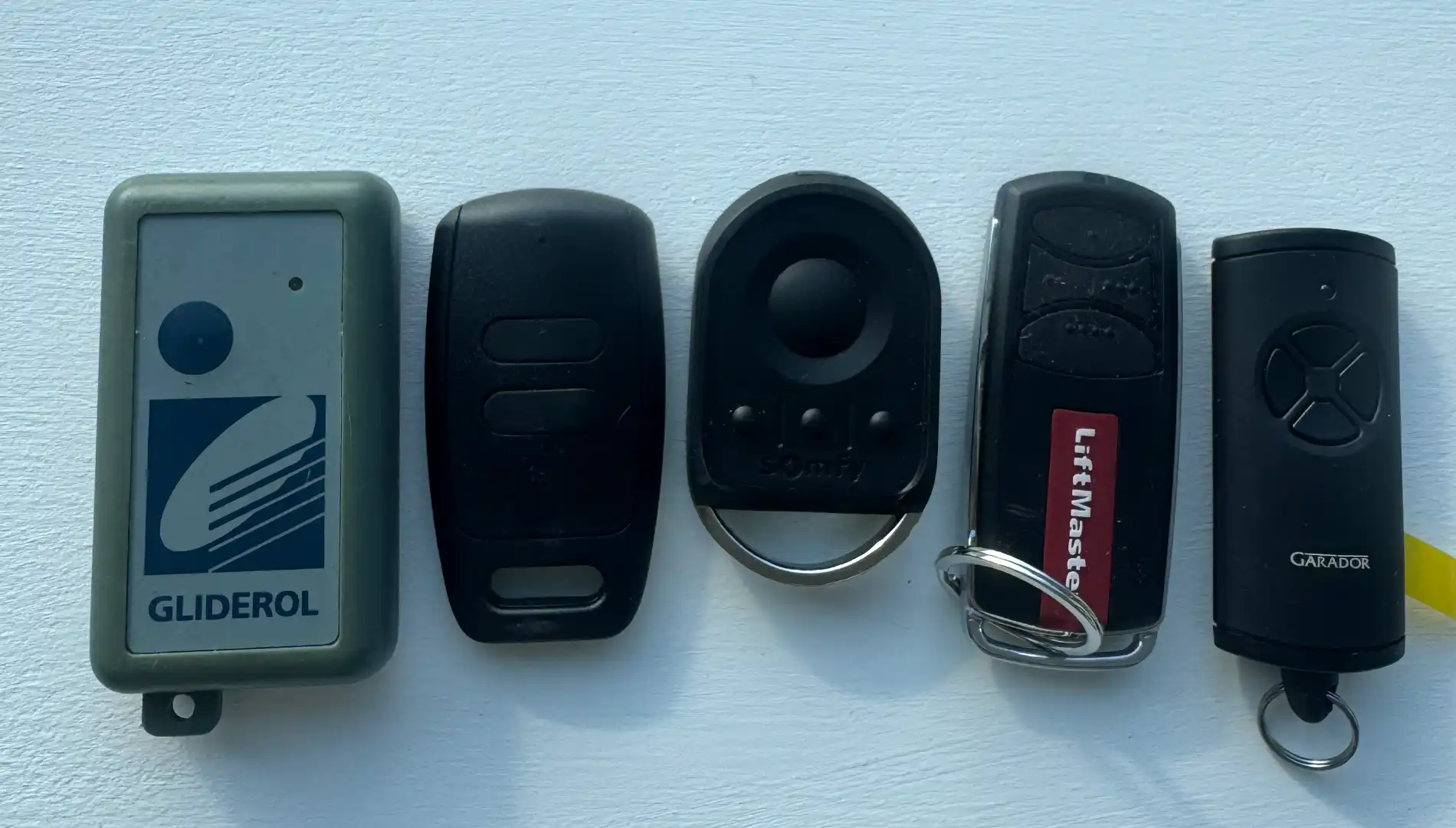
- Whether the remote battery may need replacing
- Whether the wall switch works
- Whether another remote works
- Whether the door starts to move, then stops
- Whether the motor makes a sound but the door does not move
If the door starts closing and then opens again, it may be reacting to resistance, an obstruction or a safety setting.
Some electric operators are designed to stop the door if it meets an obstacle. Hörmann, for example, states that its automatic safety cut-out stops the door if it encounters an obstacle and recommends a photocell for further protection.
If the door is reversing or stopping part-way, pause and get it checked rather than trying to override the system.
You can read more about electric options on our automated garage doors page.
Look at the tracks, but do not try to re-align the door yourself
A garage door needs to move evenly.
If one side looks lower than the other, or the door seems to be sitting at an angle, there may be an alignment issue. You may also notice scraping, rubbing, jerky movement or a gap at one side when the door tries to close.
You can look for obvious signs, such as:
- Dirt or debris in the tracks
- A visible bend in the track
- Rollers not sitting correctly
- The door looking uneven
- The door catching at one point
What you should not do is try to force the door back into place.
Re-aligning a garage door can be specialist work. If the cables, springs or tracks are involved, it needs to be handled carefully.
Ash’s Advice
A slightly misaligned door can often be put right, but it is best checked by an experienced garage door engineer. Forcing it can make the problem worse and may damage parts that could otherwise have been repaired.

Should you use WD-40 on garage door rollers?
No, WD-40 is not the right product for garage door rollers or tracks.
It is a common mistake because many people keep a can at home and reach for it when something squeaks or sticks. But garage doors need the right type of maintenance product in the right place.
Some parts may need light lubrication. Other areas need to be kept clean rather than greased.
Garador’s own maintenance guidance says running tracks should be kept clean and not greased, while pivot points should be oiled at the correct service intervals.
If the door is not closing properly, spraying products onto the mechanism may hide the real problem or make the area dirtier.
Ash’s Advice
WD-40 is not appropriate for garage door rollers. If the door is sticking, noisy or not closing properly, use the right garage door lubricant where suitable, but do not spray the tracks. If you are not sure what part is causing the problem, get it checked.
Is the door making a new noise?
Noise can be a clue.
Listen for:
- Grinding
- Scraping
- Banging
- Clicking from the motor
- A strained motor sound
- Squeaking
- A sudden clunk when the door moves
A small squeak may be a maintenance issue. A grinding or banging sound may point to something more serious.
If the sound has appeared suddenly, stop using the door until it has been checked. This is especially important if the door is also uneven, heavy, jerky or only closing part-way.
A door that is forced while a part is worn or out of place can quickly become a bigger repair.
You can also read our guide to why a garage door is noisy.
When buying parts online can cause problems
It can be tempting to search online for a replacement part, especially if the problem looks simple.
The difficulty is that garage door parts can be very specific. Springs, cables, rollers, locks, tracks, handsets and operators are not always interchangeable.
Even if a part looks similar in a photo, it may not be suitable for your door.
Garador lists separate spare part ranges for different door types, older doors, newer doors and electric operators, which shows how much variation there can be between systems.
Ordering the wrong part can waste time and may not solve the fault. Fitting the wrong part can also be unsafe.
If the door will not close and you are not certain what has failed, it is better to ask for advice before ordering anything.
When to stop and call an engineer
Some checks are safe to do yourself. Others are not.
You should stop using the door and call an experienced garage door engineer if:
- The door is stuck open or partly open
- The door is crooked or uneven
- A cable looks loose, frayed or snapped
- A spring looks damaged
- The door feels much heavier than usual
- The motor is straining
- The door closes, then opens again
- The door drops suddenly
- The door makes a loud bang or grinding noise
- You are not sure what is causing the fault
If your garage door is stuck open, it can also become a security concern. In that case, it is worth getting help as soon as possible.
Abbot Garage Doors carries out garage door repairs across Devon, Somerset, Dorset and the wider South West.
Can a garage door motor wear out?
Yes, garage door motors can wear over time, especially if the motor is under strain or not well matched to the door.
A motor may struggle if:
- The door is too heavy for it
- The door is poorly balanced
- The mechanism is stiff
- The door is misaligned
- The motor was not the right choice for that door
- Parts have worn and are making the door harder to move
The motor is only one part of the system. If the door itself is not moving smoothly, fitting a new motor may not solve the underlying problem.
This is why it is worth having the full door checked, not just the operator.
If you are thinking about electric operation, you can read more on the automated garage doors page.
Garage door won’t close: what should you try first?
Here is a simple order to follow.
- Stop forcing the door
- Check for objects in the way
- Check the power and remote if it is electric
- Look for obvious debris near the tracks
- Listen for new or unusual noises
- Check whether the door looks uneven
- Avoid spraying WD-40 on rollers or tracks
- Call an engineer if the problem continues
If the door still will not close after the simple checks, it is time to get it looked at.
What if the door keeps doing this?
If the same fault keeps coming back, the door may need more than a quick adjustment.
Repeated closing problems can point to worn parts, poor alignment, motor strain, or a door that is becoming less reliable with age.
In some cases, a repair will be enough. In others, replacement may be the better long-term route.
You can read more in our guide to garage door repair or replacement.
Areas we cover
Abbot Garage Doors works across Devon, Somerset, Dorset and the wider South West.
We help customers with garage door repairs, automated garage doors and replacement doors in areas including Exeter, Newton Abbot, Torquay, Honiton, Taunton, Barnstaple, Bridgwater and Yeovil.
If you are not sure whether we cover your area, please get in touch and we will be happy to advise.
FAQs About Garage Doors Not Closing Properly

Need Help With a Garage Door That Will Not Close?
If your garage door will not close properly, Abbot Garage Doors can help.
We can check the door, identify the cause and advise whether it needs a repair, adjustment, replacement part or further work.
If the door is unsafe, stuck open or leaving your garage unsecured, please get in touch.